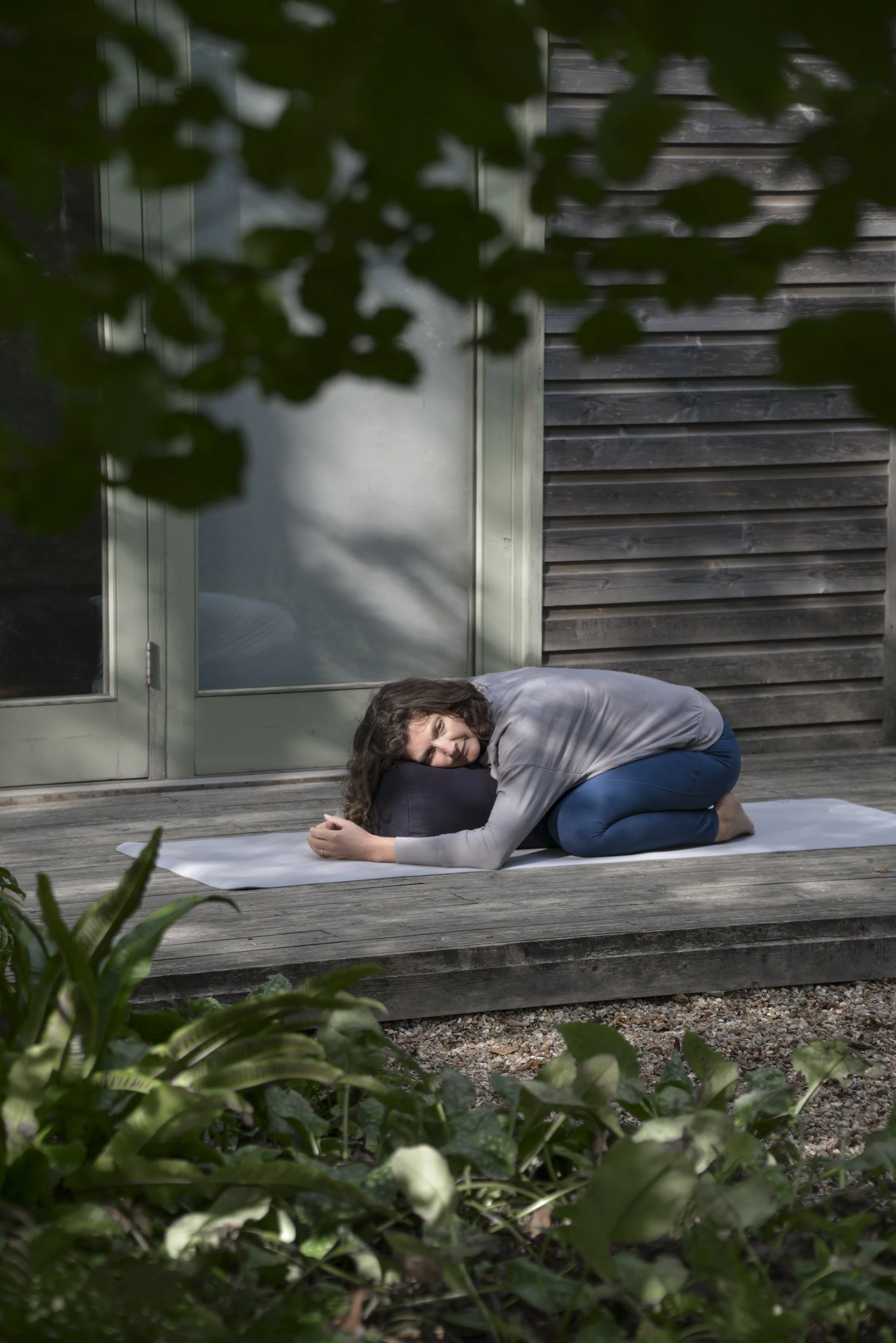

Could a Good Night's Sleep Reduce the Risk of Metabolic Syndrome?
/
“Sleep profoundly influences immune and inflammatory responses…”
Read More“Sleep profoundly influences immune and inflammatory responses…”
Read MoreDeclining oestrogen levels heighten sensitivity of the HPA axis…
Read MoreGiven that the feet support our entire body weight and play a role in almost every action we do, I think they deserve our attention.
Read More…self compassion is the missing component of good health…
Read MoreSleep is the most rejuvenating aspect of our daily life.
Read MoreADHD is a neurodevelopmental condition characterised by inattention, hyperactivity, and impulsivity. There are three subtypes of ADHD: Hyperactive, Inattentive and Combined. According to MRI scans taken in 2017 by Gehricke JG et al, the brains of children with ADHD showed smaller brain volumes with the size of specific brain structures reduced. By adulthood, the ADHD brain has mostly normalised in size but not in function. The ‘ADHD brain’ is literally wired differently with complex micro and macrostructures showing smaller amounts of white and grey matter contributing to poor executive function, emotion regulation and attention. Anxiety and depression can be comorbid with ADHD as can Obsessive Compulsive Disorder and Oppositional Defiant Disorder. People with ADHD often experience learning difficulties. The following explains more about the role of specific brain structures and regions and how they differ in ADHD.
Grey and white matter house nerve bodies and axons respectively, signalling across a synapse (a gap between the two). In ADHD there is a delay in signalling, contributing to slower processing.
The Prefrontal Cortex regulates behaviour, emotions and attention. People with ADHD tend towards hyperactivity, inattention and poor decision making do to alterations in circuitry and weaker activation of the Prefrontal Cortex.
The Basal Ganglia responsible for motor learning, also helps regulate behaviour, emotions, and the ability to plan, focus, and multi-task; all of which are dysregulated with ADHD due to inward deformations in the Basal Ganglia resulting in dopamine dysregulation.
The Default Mode Network (DMN) is active when we are at rest enabling daydreaming. In an ADHD brain, the DMN has difficulty switching off. Where normally it would relay messages to the Prefrontal Cortex to switch tasks, in ADHD the process is slower and therefore we can get stuck daydreaming or in mental wandering.
The Limbic System is a set of brain structures including the hippocampus, hypothalamus, amygdala:
The hippocampus is responsible for memory formation and spatial navigation; your ability to know where you are, where you want to go and how you plan to get there. People with ADHD suffer from poor working memory and a poor sense of direction.
The hypothalamus controls the autonomic nervous system and hormone release. People with ADHD can be stuck in sympathetic dominance (fight-flight mode) as the stress hormones cortisol and norepinephrine are dysregulated. They therefore have difficulty managing stress as the Hypothalamic-Pituitary-Adrenal (HPA) axis, responsible for the stress response is dysfunctional. Cortisol is also related to our circadian rhythm which is dysregulated in ADHD causing difficulty getting to sleep and waking up.
The amygdala is the brain’s emotional alarm system. In ADHD it suffers altered connectivity with the prefrontal cortex, the result of which is an overactive amygdala which explains the difficulty in emotional regulation, rejection sensitivity dysphoria and impulsivity.
The thalamus relays sensory signals to the cortex. It can be reduced in volume in people with ADHD causing inattention and difficulty switching tasks, hence our ability to occasionally hyper-focus but comorbid with emotional dysregulation; if you try to drag someone away from a task on which they are hyper focused, they can have an emotional outburst.
It is suggested that as well as genetic mutations caused by certain syndromes, environmental factors like chronic stress during brain development could contribute to underdeveloped brains. Today, more and more research is being done into how Yoga and mindfulness techniques can regulate the autonomic nervous system, support the HPA axis and positively affect specific brain structures and regions. It can be a practical adjunct in the treatment of ADHD.
If you suspect you have ADHD, speaking to other people with the condition can help. There are a number of interesting and validating podcasts I recommend, including ADHD Chatter Podcast on YouTube or Spotify and https://www.adhdwomenswellbeing.co.uk/adhd-podcast
If you want a diagnosis, consult your GP. You can either go on a very long waiting list, or go down the Right to Choose path which can speed things up. Alternatively, you could arrange a private assessment in your area.
The following article may be helpful: https://magazine.medlineplus.gov/article/adhd-across-the-lifespan-what-it-looks-like-in-adults
Why not read A Day in the Life of a Woman with ADHD.
References:
Vogt BA. Cingulate impairments in ADHD: Comorbidities, connections, and treatment. Handb Clin Neurol. 2019;166:297-314. doi: 10.1016/B978-0-444-64196-0.00016-9. PMID: 31731917.
Gehricke JG, Kruggel F, Thampipop T, Alejo SD, Tatos E, Fallon J, Muftuler LT. The brain anatomy of attention-deficit/hyperactivity disorder in young adults - a magnetic resonance imaging study. PLoS One. 2017 Apr 13;12(4):e0175433. doi: 10.1371/journal.pone.0175433. PMID: 28406942; PMCID: PMC5391018.
Gonzalez NA, Sakhamuri N, Athiyaman S, Randhi B, Gutlapalli SD, Pu J, Zaidi MF, Patel M, Atluri LM, Arcia Franchini AP. A Systematic Review of Yoga and Meditation for Attention-Deficit/Hyperactivity Disorder in Children. Cureus. 2023 Mar 14;15(3):e36143. doi: 10.7759/cureus.36143. PMID: 37065343; PMCID: PMC10101238.
Winke Francx, Alberto Llera, Maarten Mennes, Marcel P. Zwiers, Stephen V. Faraone, Jaap Oosterlaan, Dirk Heslenfeld, Pieter J. Hoekstra, Catharina A. Hartman, Barbara Franke, Jan K. Buitelaar, Christian F. Beckmann,
Arnsten AF. The Emerging Neurobiology of Attention Deficit Hyperactivity Disorder: The Key Role of the Prefrontal Association Cortex. J Pediatr. 2009 May 1;154(5):I-S43. doi: 10.1016/j.jpeds.2009.01.018. PMID: 20596295; PMCID: PMC2894421.Integrated analysis of gray and white matter alterations in attention-deficit/hyperactivity disorder, https://doi.org/10.1016/j.nicl.2016.03.005.
Sobel LJ, Bansal R, Maia TV, Sanchez J, Mazzone L, Durkin K, Liu J, Hao X, Ivanov I, Miller A, Greenhill LL, Peterson BS. Basal ganglia surface morphology and the effects of stimulant medications in youth with attention deficit hyperactivity disorder. Am J Psychiatry. 2010 Aug;167(8):977-86. doi: 10.1176/appi.ajp.2010.09091259. Epub 2010 Jul 1. PMID: 20595414; PMCID: PMC4254769.
Luu B and Fabiano N (2025) ADHD as a circadian rhythm disorder: evidence and implications for chronotherapy. Front. Psychiatry 16:1697900. doi: 10.3389/fpsyt.2025.1697900
Onnink AM, Zwiers MP, Hoogman M, Mostert JC, Dammers J, Kan CC, Vasquez AA, Schene AH, Buitelaar J, Franke B. Deviant white matter structure in adults with attention-deficit/hyperactivity disorder points to aberrant myelination and affects neuropsychological performance. Prog Neuropsychopharmacol Biol Psychiatry. 2015 Dec 3;63:14-22. doi: 10.1016/j.pnpbp.2015.04.008. Epub 2015 May 5. PMID: 25956761; PMCID: PMC4515357.
Stevens MC, Haney-Caron E. Comparison of brain volume abnormalities between ADHD and conduct disorder in adolescence. J Psychiatry Neurosci. 2012 Nov;37(6):389-98. doi: 10.1503/jpn.110148. PMID: 22663946; PMCID: PMC3493096.
(https://www.sciencedirect.com/science/article/pii/S2213158216300468)https://www.davidsongifted.org/gifted-blog/understanding-diagnosing-and-coping-with-slow-processing-speed/
https://chadd.org/attention-article/managing-inattentive-adhd-with-psychosocial-treatments/
https://chadd.org/attention-article/mindfulness-meditation-and-yoga-as-treatments-for-adhd/
https://my.clevelandclinic.org/health/body/limbic-system
I only learned about ADHD when ‘slow processing’ was suggested as the cause of my son’s difficulties at college. I began to look into the condition and grief set in for the child I had been. ‘This is me,’ I realised. ‘This is my life, this is why I struggled so much at school’ - not only with learning because I too had slow processing and an absolutely dreadful memory, but also with poor time keeping and organisation. I failed tests and exams because I would misinterpret the question or fail to memorise the answers. ‘This is why I have failed in education’ - let’s see: I got an E in Art; my only A’ level, I dropped out of fashion design, nutritional therapy and medical herbalism. ‘This is why I have failed careers’ - secretarial work (that was boring anyway), being a chef (way too stressful) and let’s face it, I don’t think you could describe me as a successful Yoga teacher! The list of why’s goes on and on. I am still on a path to learning all I can but I know, despite not yet having a diagnosis, that I have ADHD; I tick ALL the boxes.
The world isn’t set up for people like me. And while I am today, in the mood to laugh at myself, I am often in tears of frustration, low mood paralysed by pracrastination or needing to retreat from the world; I really struggle to be me at times. I mask who I really am much of the time; I’m not even sure who that is; I have so many personality types to suit who I’m with. But I thought that writing about a day in my life (while making myself feel vulnerable), might resonate with some of my readers and encourage others to be more understanding of those who struggle with the condition. I have written this straight from my brain, so it may sound muddled or confusing - that’s just me!
Waking up:
It’s 4, or 5, or 6 a.m. I am nowhere near ready to get out of bed. I am wide awake and yet still really tired. My slightly arthritic back is stiff and I can feel that staying in bed isn’t helping. So I place a pillow between my knees and using Ujjayi breathing, I move my pelvis this way and that until my back eases. Sometimes, this so relaxing that I fall asleep again, especially if I’ve had a bad night.
Getting up:
I go to the bathroom and wash. My husband tries to speak to me but I can neither respond nor speak. He’s trying to discuss politics! I have NO headspace for this. Be quiet! Go away! Leave me in peace. My brain is still so sleepy. There’s no chance of making sensible decisions:
What should I wear?
Should I go outside first (to get daylight into my pineal gland and help reset my circadian rhythm because surely this will help me sleep better? Pah)!
I’ll put my mucky jeans on.
No, I’ll do some Yoga first. I have to teach this morning.
But I haven’t done a workout yet this week. I feel guilty. Maybe I should go to the gym. No, it’s too late for that.
I’ll go for a walk.
I take too long on the walk, getting distracted by the beauty and serenity of nature. I am soothed by it but now I am in a rush.
Breakfast:
Is this a day for coffee? Real coffee or decaffeinated? If I have real coffee, I might stay awake tonight (and get verbal diarrhoea and possibly get hyper too). Decaf. I’m now cooking something when I don’t have the time. I’m eating 30 minutes before teaching. Darn it! I forgot to take my pills. (I am supposed to take digestive enzymes before breakfast). I’ll take them at lunchtime. Crikey, it’s 9.15 and my clients will be here soon.
In the bathroom:
Urgh, I look awful. I want to put makeup on. I do the basics. Hurry up! I need the loo. Hurry up! Your clients are arriving - I can hear the door opening.
Teaching:
I’m in my calm place. I win at this, (unless my sleep has been really bad and then I get my lefts and rights muddled up, or I just can’t find the words). I’ve forgotten that student’s name. She’s been coming for years, what’s her name? I feel ashamed and embarrassed. I have a hot flush. We’re meditating now. My mind’s all over the place. Racing with this thought or that. I want to look at my phone. I mustn’t. We’re meditating for goodness sake. Is everyone okay? No one’s looking troubled. Close my eyes and start again.
Class over:
What’s next? Shopping. Write a list. What do I need? I had loads of things in my head last night. I can’t think right now. Remember that washing that needs doing? Put it on. What was I doing before? Shopping! Where’s my phone? I must have left it upstairs. Nope. Did I go to the loo? No. I just remembered something I needed. Where’s my damn phone? 10 minutes later… it’s on top of the laundry basket! Right, shopping list. What was that thing I needed to put on the list? It’s gone. Let’s check the fridge. I’m staring into space. Completely blank. Suddenly aware that I’ve glazed over. What was I doing? Shopping. Check the cupboards. I’d really like a cup of tea. Kettle’s boiling. Get the shopping bags. Well done. Shall I put the tea in a flask and take it with me? Where’s the flask? I swear I put it away last night. Where is it? Another 10 minutes later… it’s still in my gym bag! I hate shopping. I really don’t feel like going today. Do I have to go? Could I put it off until tomorrow? I’d much rather do something creative. Nah, let’s not go shopping.
Have you noticed that I’ve changed the format? I was using bullet points and now I’m writing long sentences. I could remedy that. The perfectionist in me really wants to but I know it’ll take me ages and for the sake of demonstrating what it’s like to be in my head, I won’t. But it’s really niggling at me. It feels unprofessional.
Lunch time:
What can I make for lunch? Stare into the fridge. No leftovers. Oh, I know, I’ll make… Eating. Damn it! I forgot my digestive enzymes again. Double damn it, these vegetables were meant for supper. What am I going to make for supper now? Ohhh, I should have gone shopping! Now I’m overwhelmed. Exhausted. I’ll just watch an episode of… I’m concerned you’re judging me reader; thinking how lucky I am to have so little to think about or do. Believe me, I don’t feel good about this. I feel embarrassed at how unsuccessful I am, ashamed at how little I earn. I have very little sense of purpose and it gets me down.
Later that day… Bedtime:
I am falling asleep at 9.30. I know to slow down an hour or so before bed. I dim the lights to help my circadian rhythm and I shouldn’t have a screen on. But this show is so good. I’ll just watch another episode. My head is nodding. Brush my teeth. Wash my face. In bed. I’m wide awake now. I’ll try focusing on my breath. Nope, not working. I’ll do a body scan. Focus your attention on your left big toe… zzz. Awake. What time is it? It must be morning, I’m wide awake. It’s midnight. Start again. Listen to a story… zzz. I hear a noise. I’m awake again. I need a pee. It must be morning. It is, it’s 2.30, 3.30 or if I’m lucky 4.30. Listen to a story. It’s not helping. My back’s aching. Toss and turn. 6.30 My husband gets up. It’s too early. I’m so tired. I’m really stiff. I REALLY need a pee. I drag myself out of bed. Don’t speak to me. Arghhh!
At post menopause every symptom of ADHD has been magnified especially Rejection Sensitivity Dysphoria (RSD). The bad day I described above can be a lot worse. I can procrastinate to the point where I achieve absolutely nothing. I comfort eat in the evenings and then feel bad about it because my stomach is bloated. I can be very cruel to myself. I’ve just finished a floristry course (another course? I love a course. I hear the judgement) but I’m holding myself back from setting up in business because I’m scared of rejection. I’m not good enough. I hate getting feedback. I am unable to regulate my emotions especially if I’m triggered by a comment. I explode and cry or I freeze and retreat. I feel ashamed and foolish.
I know I should promote my business on social media. I should share all the knowledge that I can’t remember at this precise moment. But I don’t want to show up. I feel a fraud. But I need to tell people how I can help them. I need to explain why I am the Yoga teacher they should work with. I need them to know that I am the best at what I do, that I will have their back, that I will transform their mental and physical health. But I can’t, I’m no good. Put someone in front of me and I will know precisely what they need; I will give them what they need. But I don’t know what to say in a social post. I can’t think what to say. Which photo would I use? I should sort my photos out. I should stop bloody ‘shoulding’ all over the place! Why is should spelt with an L?
I am frozen. Stuck in a pit of shame and guilt and remorse and grief that I could have done so much better, I could have been so much better if only I’d known about ADHD when I was young. I’m 55. What do I have to show for it? What the hell am I going to do for the rest of my life? How on earth am I going to survive? Who can help me? No one. No one can help you. You haven’t got any friends. Your family don’t care about you. Who would want to bother? You’re too negative, you interrupt all the time, you’re too much. There must be someone I can call on. Who can I call? No one. Feel the shame. Feel the guilt. Feel the remorse. Sit with the grief and the loneliness. Get on your Yoga mat and feel all the horrible, shameful emotions you are going through.
Are you kidding? Why would I want to do that?
Sometimes I really can’t do that. But sometimes I do that. I need to be present. I need to be self compassionate more than anything. And so I breathe. And I move. And I do the strong stuff because it brings me into my body, makes me grounded helps me to feel strong on the outside as well as the inside. Right now, it is hard for me to be introspective which is much better for my brain and nervous system. At the time of writing, my life feels topsy turvey. I have a husband who, two years after a serious motor bike accident, still has broken bones because he too has ADHD (full disclosure, we are both undiagnosed but you know what you know). He uses smoking and sugar to soothe his nervous system. Smoking blocks the bone building receptors and sugar causes inflammation. I don’t understand it. I do, at least, practice self care to a greater degree than it may sound here.
I am furious! I want to not care. But I am caring. I do care. I carry all of his pain, his resistance, his lack of will. I am holding a lot, carrying a lot and all this is not helping my ADHD.
I don’t know if I really want to share this post. I don’t want people to pity me, or reject me for oversharing. I want people to understand. People close to me don’t understand. No one’s ever understood. I don’t even understand! I’m overwhelmed. Exhausted. I might delete the post. I need a rest.
I have been working on this post for 8 days. It took 5 hours to write initially and it has subsequently undergone a number of edits. Such is the life of a woman with ADHD. Sigh. I need to go out in nature now.
If you want to understand more about ADHD; what it is and how it affects various brain structures, read this article.
https://www.birchwoodyoga.co.uk/blog/2026/2/24/adhd-explained
Breath plays a crucial role in maintaining regulation
Read MoreIt’s a cliche but Yoga is a journey; one that has the power to change with you.
Read MoreMindfulness and Yoga have emerged as powerful tools in managing stress, offering a holistic approach to wellbeing that integrates the mind, body, and spirit. At their core, both practices aim to cultivate a state of awareness and presence, allowing individuals to navigate life's challenges with greater ease and resilience.
Mindfulness, a practice rooted in ancient meditation traditions, involves paying attention to our thoughts, emotions, and bodily sensations in a non-judgmental way. By fostering an attitude of curiosity and acceptance, mindfulness helps to interrupt the cycle of stress reactivity. This shift in perspective enables individuals to respond to stressors more thoughtfully rather than reacting impulsively. Regular mindfulness practice has been shown to reduce symptoms of anxiety and depression, improve attention and concentration, and even enhance overall physical health.
Yoga, on the other hand, combines physical postures, breathing exercises and meditation to promote mental and physical wellbeing. The physical practice of Yoga helps to release tension and stress accumulated in the body, while breathing techniques (pranayama) encourage relaxation and mental clarity. The meditative aspects of Yoga support mindfulness, helping practitioners to develop a deeper awareness of their internal states. Together, these elements of Yoga contribute to a reduction in stress levels, improved mood, and a sense of inner peace.
Incorporating mindfulness and Yoga into daily life can offer a sanctuary from the stress of modern living, providing tools that empower you to manage stress proactively. Whether it's through a dedicated class, a few minutes of meditation each day, or simply practicing mindful breathing during a break, these practices invite a return to balance and harmony within ourselves.
Practicing Yoga at a slower pace, with mindful awareness of which attitude we have brought to our practice allows us to pause, assess each moment and cultivate positive habits…
Read MoreI wish I had spent the money on working with a nutritional therapist instead of trying to figure it all out for myself…
Read MoreI am reminded of the many helpful methods in which we can relinquish the cruel mind:
Read More…we can all benefit from adopting skills that help us manage stress.
Read MoreIt’s a cliche but Yoga is a journey; one that has the power to change with you.
Read MoreI know how important it is that I prioritise myself
Read MoreHere are the top 3 issues it might help to address in your menopausal year…
Read MoreWith practice and awareness, we can learn to step back and recognise that this is a need that doesn’t serve us and let it go.
Read MoreTaking a full sabbatical from work is a luxury few of us can afford. But how about taking a sabbatical from pressure?
I’ve realised that expecting too much of myself causes me to suffer and burn out. When I allow perfectionism to dominate, nothing is good enough, and am my own worst critic. But I am the one putting pressure on myself, allowing the ‘shoulds’ to govern me.
So why do we pressure ourselves? Is it because we want recognition? Perhaps we want to do better, be the best, crave attention, want the next best thing, long for, lust after, covet, yearn. Do these actions make us happy? The things that really make us happy are those that fulfil our human needs: friends, family, community, health, nourishment, sleep, shelter, safety, enough wealth to survive and a little more to thrive. Enough.
When we feel stressed, it is often our own expectations getting in the way; the pressure we pile onto ourselves. We could be our own best friend instead of our own worst enemy. What would you do if your best friend told you they felt pressured and that it was making them sick? What advice would you give? Make a list and see what comes up as you read it through.
Here are some ideas I’ve had while taking a pressure sabbatical:
Stepping away from social media. I’m not missing out on life because life’s right here… now.
I’ve learned that I don’t have to make an excuse or give a reason when saying NO.
I’m only doing the bare minimum.
I’ve let perfectionism go. Enough is good enough.
I step away as soon as I begin to feel overwhelmed. Space brings perspective. Time spent in nature soothes our nervous system so I feel even better for a walk.
I am easily bored so instead of pressuring myself to focus on just one job, I have a few on the go at once. When I start to feel dullness or boredom, I switch jobs. This has been a revelation to me because I actually get more done!
I have learned to ask for help and accept it when offered. Pride doesn’t get me anywhere.
Timetabling is great for brain fog! it means I can tick off the jobs!
Regular rest breaks are essential. Pushing on is pushing into burn out. Rest can be 3 minutes of pranayama, a little weeding, movement of any kind.
Remember, as Brene Brown says, “you are always doing the best you can,” so why pressure yourself to do more?
Leave a comment if you have any good ideas for easing pressure.
Find out more about the De-stress Your Mid-life course.
Yoga classes, courses and workshops led by qualified yoga teacher Anneliese Wells. Taught in a beautiful, rural, private studio in Barcombe, East Sussex.